The Journey Inside Your Bottle: Following American Hemp From Soil to Shelf
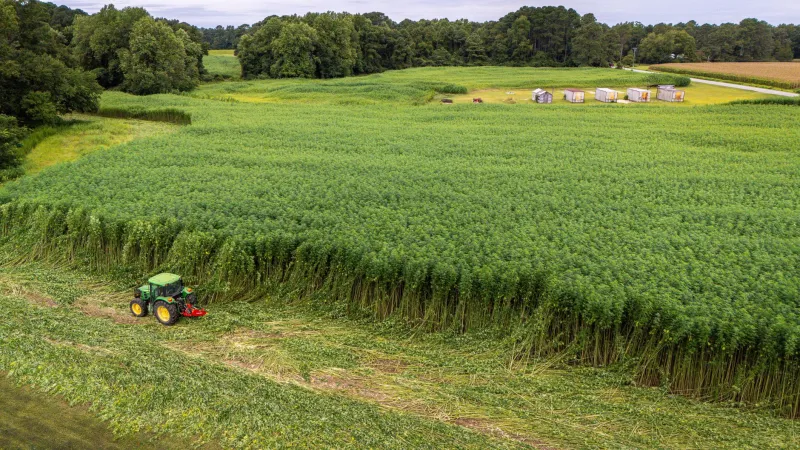
That little amber bottle sitting in your bathroom cabinet? It's the end of a long road. Before the dropper ever reached your hands, your CBD oil was a plant swaying in a field somewhere — maybe in Kentucky, Colorado, Oregon, or North Carolina. And the details of that journey matter more than most shoppers realize.
Let's trace the path, step by step, and figure out why the words "sourced and made in the USA" should carry real weight when you're browsing an online marketplace like ours.
It All Starts With the Soil
Hemp is a remarkably hardy crop, but not all hemp is created equal. The plant is what farmers call a bioaccumulator, meaning it pulls whatever is in the soil — the good and the bad — straight into its stalks and flowers. Grow hemp in contaminated ground, and those contaminants end up concentrated in your extract.
That's why reputable American hemp farmers are obsessive about their fields. Under the 2018 Farm Bill, licensed hemp grown in the U.S. must be tested and must stay under the federal limit of 0.3% delta-9 THC. States like Kentucky and Colorado built out rigorous regulatory programs after hemp's reintroduction, and many American growers operate on land that's been farmed for generations — soil they have every incentive to keep clean.
When you buy domestically, you're buying from a regulated supply chain. When you buy hemp from an overseas source with murky oversight, you're taking somebody's word for it.
Extraction: Where Quality Gets Decided
Once hemp is harvested and dried, the real transformation begins. This is the step where the difference between a great product and a dud gets locked in.
The gold standard is CO2 extraction. It uses pressurized carbon dioxide to pull cannabinoids and terpenes out of the plant material without leaving behind nasty solvent residue. It's more expensive to do, which is exactly why budget brands skip it in favor of cheaper methods — sometimes butane or ethanol done sloppily, sometimes little more than a solvent bath you'd rather not think about.
Here's a quick cheat sheet on what happens after extraction:
- Full-spectrum oil keeps the whole crew of cannabinoids, terpenes, and trace THC (legally under 0.3%) — the entourage effect crowd's favorite.
- Broad-spectrum oil goes through extra processing to strip out the THC while keeping the rest.
- CBD isolate is pure cannabidiol, nothing else — great for folks subject to workplace drug testing.
A farm-to-bottle brand will tell you which one you're getting, which extraction method they used, and which third-party lab verified it. If that information is missing, that's not a detail gap — that's a red flag.
Why Domestic Sourcing Can Actually Save You Money
Here's something that surprises a lot of first-time buyers: American-made CBD isn't automatically the premium-priced option. In fact, since hemp became federally legal, U.S. production has exploded. More domestic supply means lower shipping costs, fewer import fees, and less red tape — savings that competitive brands pass along to customers.
Compare that to imported CBD, which can rack up customs costs, long transit times, and quality degradation along the way. You're often paying more for a product that's harder to verify.
The math gets even better when you think about potency. A well-made American oil at 25mg per serving that actually delivers 25mg beats a cheap import labeled 50mg that lab tests show contains half of that. Price per bottle lies. Price per verified milligram tells the truth.
How to Spot a Genuine Farm-to-Bottle Brand
"Farm to table" worked as a restaurant buzzword, and now "seed to sale" is having its moment in hemp. Unfortunately, some brands slap those phrases on labels without earning them. Here's your verification checklist:
- Look for a batch number and QR code. Scanning it should take you straight to a third-party Certificate of Analysis (COA) that matches the batch you bought.
- Check where the hemp was grown. Not just "made in the USA" — where was the crop cultivated? A brand that names its farm or state is usually a brand that's proud of its supply chain.
- Scan the COA for contaminants. You want to see pass results for pesticides, heavy metals, and residual solvents, plus cannabinoid content that matches the label.
- Follow the company on its own website. Brands with nothing to hide tend to publish sourcing details, extraction methods, and lab results front and center.
If a company dodges questions about where its hemp comes from, it's usually because the answer isn't flattering.
The Bottom Line for American Shoppers
The CBD marketplace is crowded, and marketing budgets can make a mediocre product look great. But the supply chain doesn't lie. Hemp grown on regulated American farms, extracted with clean methods, and tested by independent labs produces a fundamentally different product than mystery oil with a nice label.
So the next time you're comparing bottles, ask the question most shoppers skip: where did this actually come from? If the answer is a named farm in Kentucky, a CO2 extraction facility in Colorado, and a lab report you can pull up in ten seconds — you've found a brand worth your money. That's the kind of transparency we look for in every product we carry, because knowing your oil's backstory is the easiest way to make sure it works as hard as you do.