Glow or Gimmick? Breaking Down the CBD Skincare Craze Before You Buy

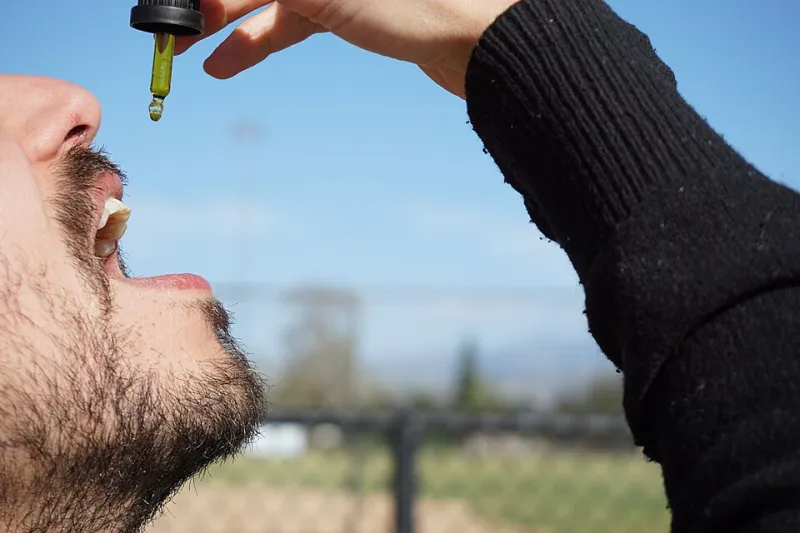
Photo: John Vachon, Public domain, via Wikimedia Commons
Walk into any Sephora, Target, or wellness boutique in America right now, and you'll find CBD staring back at you from the skincare aisle. Face serums, eye creams, lip balms, body lotions — hemp-derived CBD has planted its flag firmly in the beauty industry, and it's not going anywhere soon.
The global CBD skincare market is projected to hit billions of dollars in the coming years, and American consumers are leading the charge. But here's the thing: with so many products making bold claims about clearing acne, erasing wrinkles, and calming inflamed skin, it's worth slowing down and asking — what does the evidence actually support? And how do you tell a genuinely effective CBD topical from an overpriced jar of marketing?
Let's break it all down.
Why CBD and Skin Make Sense Together (In Theory)
Before getting into the products themselves, it helps to understand why CBD is showing up in skincare in the first place — and the reasoning is actually pretty solid.
Your skin has its own endocannabinoid system. That's not marketing language; it's biology. Skin cells contain cannabinoid receptors (CB1 and CB2), and researchers believe the ECS plays a role in regulating oil production, inflammation, and skin cell turnover. When you apply CBD topically, it can interact with these receptors locally without entering the bloodstream in significant amounts.
CBD is also a known antioxidant — in fact, a 1998 patent held by the U.S. federal government specifically recognizes cannabinoids as antioxidants and neuroprotectants. Antioxidants are a cornerstone of anti-aging skincare because they help neutralize free radicals, the unstable molecules that contribute to collagen breakdown and fine lines.
So on paper? CBD and skin have a logical connection. The challenge is that "logical connection" doesn't always translate to dramatic real-world results, especially in the current landscape where clinical evidence on CBD topicals is still catching up to consumer enthusiasm.
What the Research Actually Shows
Let's start with acne, since it's one of the most commonly cited use cases for CBD skincare.
A 2014 study published in the Journal of Clinical Investigation found that CBD helped inhibit sebum production and had anti-inflammatory effects on human sebocytes (the cells that produce oil in your skin). For people with acne-prone skin, excess sebum is a major contributing factor, so this finding generated a lot of excitement.
More recently, a 2019 study found that a CBD-enriched ointment improved skin conditions including eczema, psoriasis, and scarring in participants over a three-month period. The results were promising, though the study was small.
For inflammation and redness — whether from rosacea, post-workout skin stress, or general sensitivity — CBD's anti-inflammatory properties are among the most consistently supported in the literature. This is actually where topical CBD may have the most practical, immediate value for everyday users.
Anti-aging? That's where things get murkier. While antioxidant activity is real, the claim that CBD will noticeably reduce wrinkles or firm sagging skin is a stretch based on current evidence. Retinoids, vitamin C, and peptides still have far more robust clinical backing for anti-aging outcomes. CBD may support those ingredients as part of a broader routine, but it's not a standalone fountain of youth.
CBD Cream vs. CBD-Infused Cosmetics: There's a Big Difference
This is one of the most important distinctions that most product descriptions gloss right over, and it can make or break whether you're actually getting what you paid for.
A true CBD topical — think a therapeutic cream or salve designed to interact with skin receptors — is formulated to deliver CBD in a meaningful concentration to the skin. These products are typically made with CBD extract as a primary active ingredient and are designed with bioavailability in mind.
A CBD-infused cosmetic, on the other hand, might contain CBD as one of dozens of ingredients, often at a concentration so low it's essentially decorative. The label says "CBD" but the actual amount may be negligible. This is sometimes called "fairy dusting" in the cosmetics industry — adding just enough of a trendy ingredient to justify putting it on the label and bumping up the price.
How do you tell the difference? Look for the milligram count of CBD on the label. A quality topical will clearly state how many mg of CBD the product contains — 200 mg, 500 mg, or higher depending on the product size. If you see vague language like "hemp extract blend" with no specific CBD content disclosed, proceed with caution.
What Dermatologists Are Saying
Board-certified dermatologists in the U.S. are cautiously intrigued, which is about as enthusiastic as they tend to get about any emerging ingredient without large-scale clinical trials behind it.
Many dermatologists acknowledge that CBD's anti-inflammatory properties make it theoretically useful for conditions like eczema, contact dermatitis, and acne — particularly for patients who want to avoid steroid-based treatments. Some are recommending CBD topicals as a complementary option for sensitive skin types.
The consistent caveat from dermatologists is this: the concentration and formulation matter enormously. A 50 mg CBD cream from a quality hemp brand is a very different product from a $60 department store moisturizer with hemp seed oil listed as the eighth ingredient. (Note: hemp seed oil, while nourishing, contains little to no CBD and is not the same thing as CBD extract.)
Dermatologists also point out that CBD topicals are generally considered safe for most skin types, with a low risk of irritation compared to stronger actives like retinol or alpha hydroxy acids. That's a meaningful plus for people with reactive or sensitive skin.
Is the Premium Price Tag Worth It?
Honestly? It depends entirely on the product.
A well-formulated CBD topical from a reputable hemp brand — one that sources American-grown hemp, uses CO2 extraction, and publishes third-party lab results — can absolutely be worth the investment for the right person. If you're dealing with chronic skin inflammation, post-workout muscle soreness with a skin component, or persistent acne and you want a natural approach, a quality CBD cream or serum is a reasonable thing to try.
But a luxury department store CBD facial oil at $120 that contains 10 mg of CBD buried under a dozen other ingredients? You're mostly paying for packaging and branding.
The math is simple: calculate the cost per milligram of CBD. Divide the price of the product by the total CBD content in milligrams. A $40 product with 500 mg of CBD is a much better value than a $80 product with 150 mg.
A Quick Checklist Before You Buy
When evaluating any CBD skincare product, run it through these questions:
- Does it clearly state the CBD content in milligrams? If not, move on.
- Is there a Certificate of Analysis (COA) from a third-party lab? This verifies potency and purity.
- Is the hemp sourced from American farms? Domestic hemp is subject to stricter agricultural oversight.
- Does the ingredient list use "cannabidiol" or "hemp extract"? These indicate actual CBD. "Hemp seed oil" is not the same thing.
- What's the extraction method? CO2 extraction is the gold standard for clean, potent CBD.
The Bottom Line
CBD skincare is not a gimmick — but it's not magic, either. The science supports its anti-inflammatory and sebum-regulating potential, and for people with sensitive, acne-prone, or inflamed skin, a quality topical is worth exploring. The key is buying smart: look for transparent brands, meaningful CBD concentrations, and third-party testing you can actually verify.
As the research continues to grow, CBD's place in the American skincare routine is likely to become better defined. For now, approach it as a promising, evidence-backed addition to your wellness toolkit — not a replacement for proven skincare fundamentals, but a solid complement to them.