Swapping Scripts for Hemp: A Balanced Look at Why Some Americans Are Ditching Prescriptions for CBD

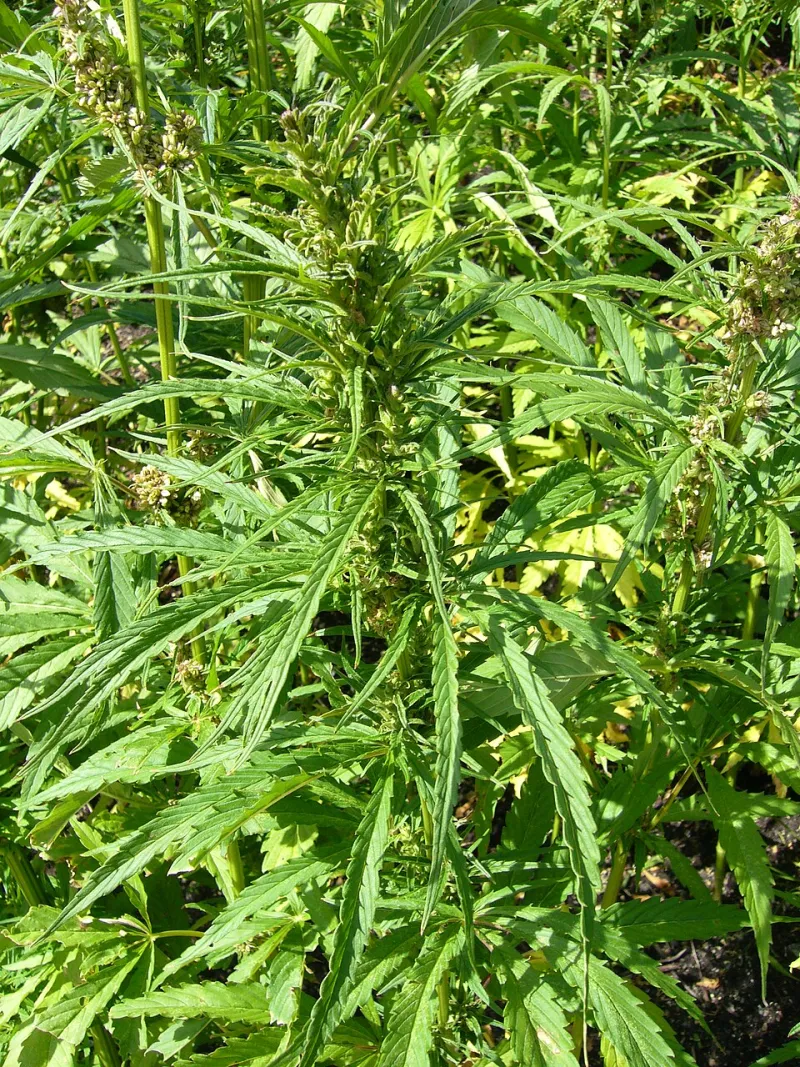
Photo: Unknown authorUnknown author or not provided, Public domain, via Wikimedia Commons
Somewhere in suburban Ohio, a 54-year-old woman with chronic back pain has quietly stopped taking her prescription sleep aid and replaced it with a full-spectrum CBD tincture she found online. In a Denver apartment, a 29-year-old with generalized anxiety disorder is using CBD gummies to stretch the gap between therapy sessions, convinced they take the edge off better than the low-dose benzodiazepine his old doctor prescribed. And in rural Georgia, a retired veteran is managing his PTSD-related insomnia with hemp oil because, as he puts it, "the VA waitlist was six months long and this actually helped."
These aren't outliers. They're representative of a quiet but significant shift happening across the United States, where millions of consumers are reassessing their relationship with prescription pharmaceuticals and experimenting with CBD as a complement — or in some cases, a replacement.
Is this a smart health trend or a dangerous leap of faith? The honest answer is: it depends entirely on what condition you're managing, what medications are involved, and how you approach the transition.
Why People Are Making the Switch
The motivations driving Americans toward CBD and away from prescriptions aren't hard to understand once you look at the landscape of conventional medicine.
Prescription drug costs in the US are among the highest in the developed world. A single month's supply of brand-name anxiety or sleep medications can run hundreds of dollars without insurance — and even with insurance, copays and formulary restrictions create real financial strain. Meanwhile, a quality CBD tincture can cost $40 to $80 and last several weeks. For uninsured or underinsured Americans, that math is hard to ignore.
Then there's the side effect question. Prescription sleep aids, benzodiazepines, and even some antidepressants carry side effect profiles that many patients find genuinely disruptive — brain fog, dependency risks, weight changes, sexual dysfunction. CBD's side effect profile is comparatively mild: occasional drowsiness, dry mouth, and digestive changes are the most commonly reported. That asymmetry is appealing to people who feel like they're trading one problem for another with conventional meds.
There's also the access issue. Getting a prescription in America often means navigating a healthcare system that can feel like an obstacle course — especially for mental health conditions. CBD is available online, at wellness shops, and even at some pharmacies, no appointment required.
Where CBD Has Legitimate Support
Let's be clear about something: CBD is not a proven substitute for most prescription medications. But that framing undersells the areas where evidence actually does support its use.
The most unambiguous case is epilepsy. Epidiolex, a pharmaceutical-grade CBD medication, is FDA-approved for two rare and severe seizure disorders — Lennox-Gastaut syndrome and Dravet syndrome. This isn't folk medicine; it's a controlled, approved drug with clinical trials behind it. For the conditions it's designed to treat, it works.
Beyond that, research on CBD for anxiety disorders is genuinely promising. A 2019 study published in The Permanente Journal found that 79 percent of participants with anxiety reported improvement in the first month of CBD use. The evidence for CBD's role in pain management — particularly inflammatory and neuropathic pain — is accumulating, though it's still not at the level required for formal approval.
Sleep is another area where consumer reports and early research align reasonably well. CBD appears to help people fall asleep more easily and stay asleep longer, particularly when anxiety or pain is driving the insomnia.
Where You Should Absolutely Pump the Brakes
Here's the part that matters just as much as the positive framing.
If you are managing a serious or complex medical condition — heart disease, diabetes, cancer, severe depression, schizophrenia, or anything involving multiple prescription medications — you should not be making unilateral decisions about replacing or reducing those medications with CBD. Full stop.
The drug interaction issue is particularly critical and genuinely underappreciated. CBD is metabolized by a group of liver enzymes called the cytochrome P450 system — the same system responsible for processing a huge range of prescription drugs, including blood thinners like warfarin, certain antidepressants, anticonvulsants, and immunosuppressants. When CBD competes with these enzymes, it can cause drug levels in your bloodstream to rise or fall unpredictably. That's not a theoretical risk — it's a documented pharmacological reality.
The takeaway: CBD combined with certain prescription medications can make those medications more or less effective, sometimes dangerously so. This is not a reason to never use CBD. It's a reason to have an explicit conversation with your prescribing doctor before combining them.
Also worth noting: the quality and consistency of CBD products varies enormously. Unlike prescription medications, CBD products aren't required to go through FDA approval before hitting shelves. A study published in JAMA found that a significant percentage of commercially available CBD products were mislabeled — containing more or less CBD than advertised, and in some cases detectable levels of THC. Buying from reputable brands that publish third-party lab results isn't optional; it's essential.
A Framework for Making Smart Decisions
If you're genuinely considering incorporating CBD into your health routine — whether as a complement to existing treatment or as a potential substitute for something milder — here's a practical approach:
Tell your doctor. Even if you're skeptical they'll be supportive, disclose what you're considering. The drug interaction issue alone makes this non-negotiable. If your current provider dismisses the conversation entirely, that's useful information about the quality of your care.
Distinguish between conditions. Using CBD to manage occasional stress or mild sleep difficulty is a very different proposition than using it to replace a psychiatric medication. Be honest with yourself about which category applies.
Set measurable goals. Don't just start taking CBD and vaguely hope things improve. Define what you're trying to address, establish a baseline, and track your response over four to six weeks.
Don't stop prescriptions abruptly. If you decide to reduce or discontinue a prescription medication, do it under medical supervision. Stopping certain medications cold turkey — benzodiazepines and antidepressants especially — can cause serious withdrawal effects.
Prioritize quality. Look for products with a current Certificate of Analysis from an accredited third-party lab. Check that THC is within legal limits and that the CBD content matches what's on the label.
The Bigger Picture
The growing interest in CBD as an alternative to prescription medications isn't irrational — it's a reasonable response to a healthcare system that often leaves people feeling underserved, overmedicated, or priced out. The desire to find a gentler, more accessible path to wellness is completely legitimate.
But wellness decisions made without information aren't empowering — they're just guesses. The Americans getting the most out of CBD are the ones treating it like what it is: a real bioactive compound that deserves the same thoughtful approach you'd give any other health intervention.
Done right, CBD can be a meaningful part of a modern wellness routine. Done carelessly, it can create new problems while leaving old ones unaddressed. The difference is almost entirely in how you approach it.